
Service design
What makes train travel good?
It isn’t the train. It is everything else.
- Client
- Elron
- Industry
- Passenger rail and public transport
- What we did
- Passenger research, journey mapping, service design and implementation
01
More passengers. Same number of trains.
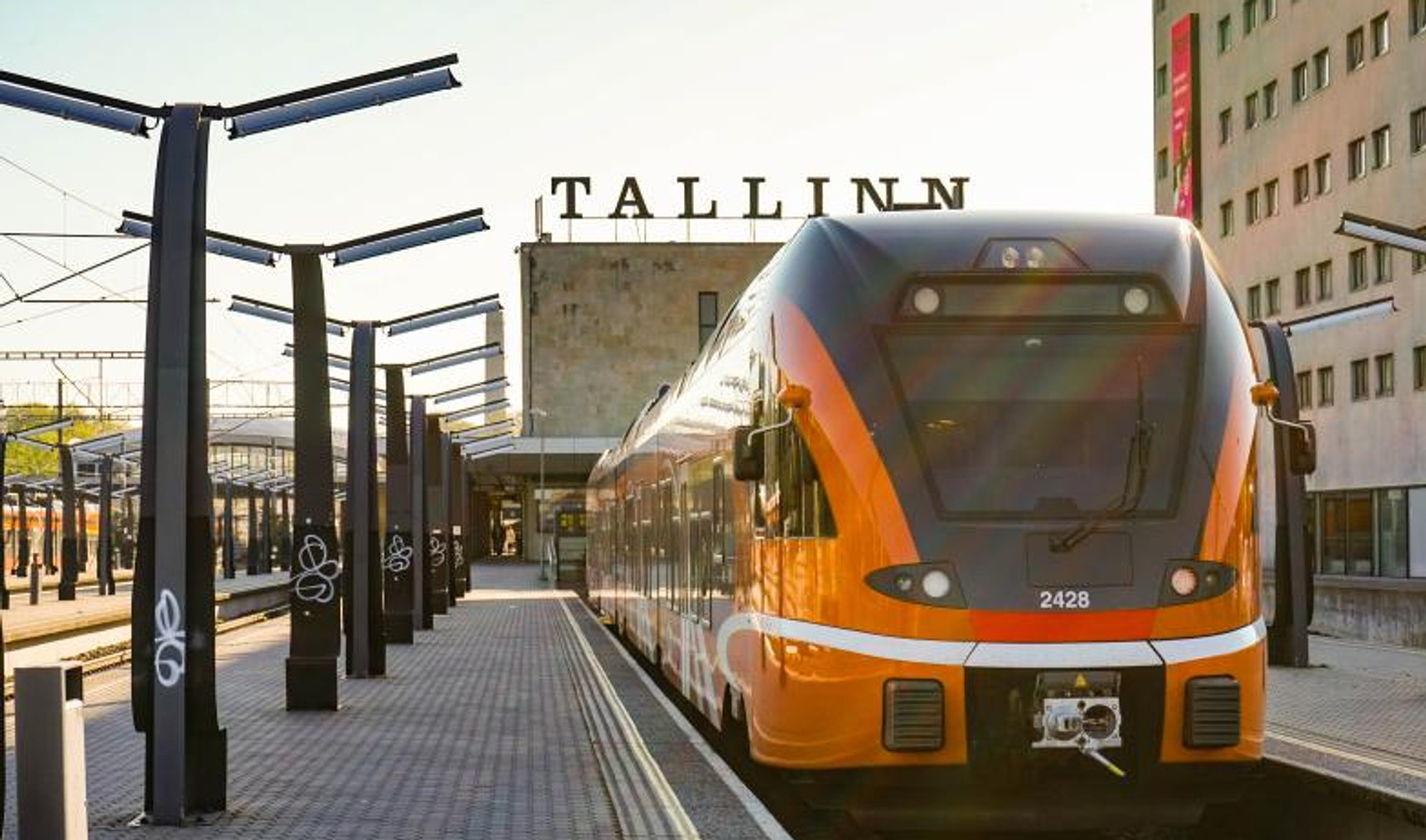
Elron has operated 38 modern Stadler trains since 2013. A decade later, passenger numbers had grown dramatically—by as much as 40% in a year—while the fleet had remained the same size.
The result was predictable: crowded trains, passengers standing for long journeys and a growing collection of complaints. Buying more trains would help, eventually. But “eventually” is not much use when you are sitting on the floor today.
Our task was to find out what makes train travel good for very different passengers, identify where the experience failed them and establish what Elron and its partners should improve first.
02
Talk to everyone
We carried out almost 100 in-depth interviews in three languages, supported by observations on trains, platforms, in stations and across Estonia. Participants ranged from daily commuters and long-distance workers to first-time travellers, families, cyclists and passengers with accessibility needs.
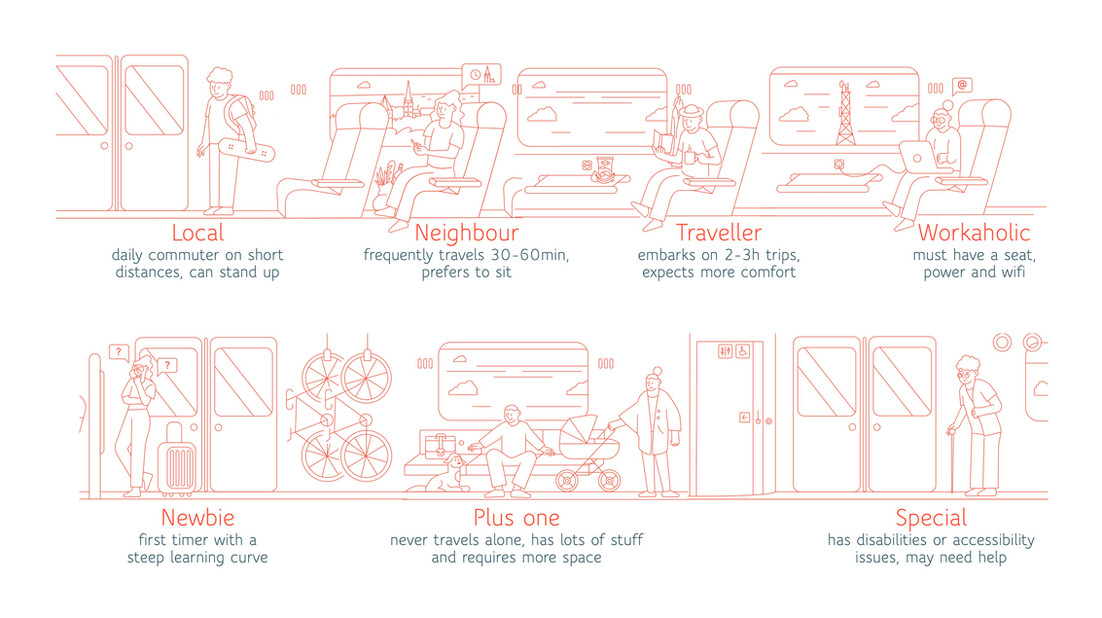
Seven passenger profiles emerged. They could all share the same carriage at the same time and still experience the journey very differently. Someone travelling two stops can tolerate standing. Someone trying to work for two hours cannot. A first-time passenger has questions that a daily commuter stopped noticing years ago.
The profiles were not demographic decorations. They gave the organisation a practical way to see how different needs collide in the same service.
03
The train is only part of the railway
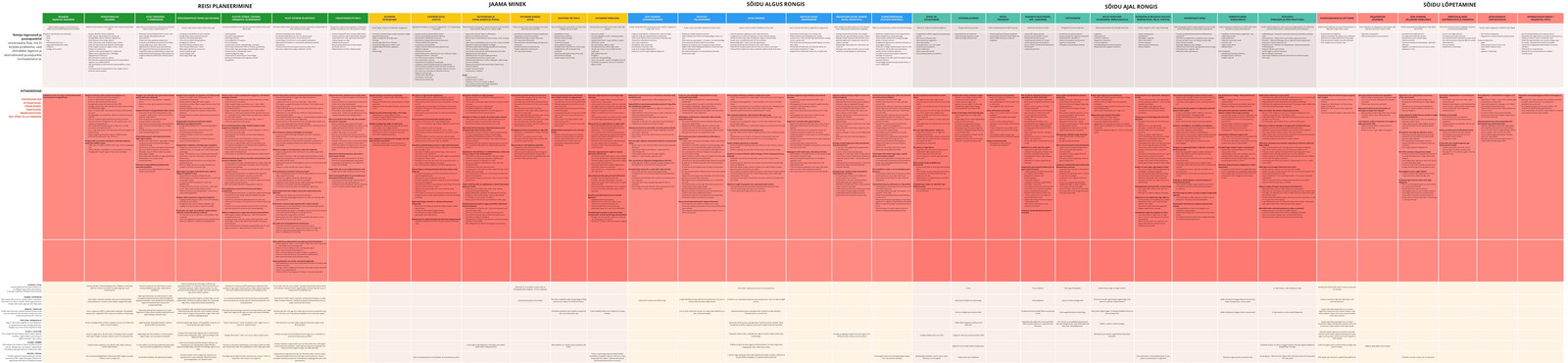
We mapped the complete passenger journey: planning at home, buying a ticket, getting to the station, waiting, boarding, travelling, getting off and reaching the actual destination.
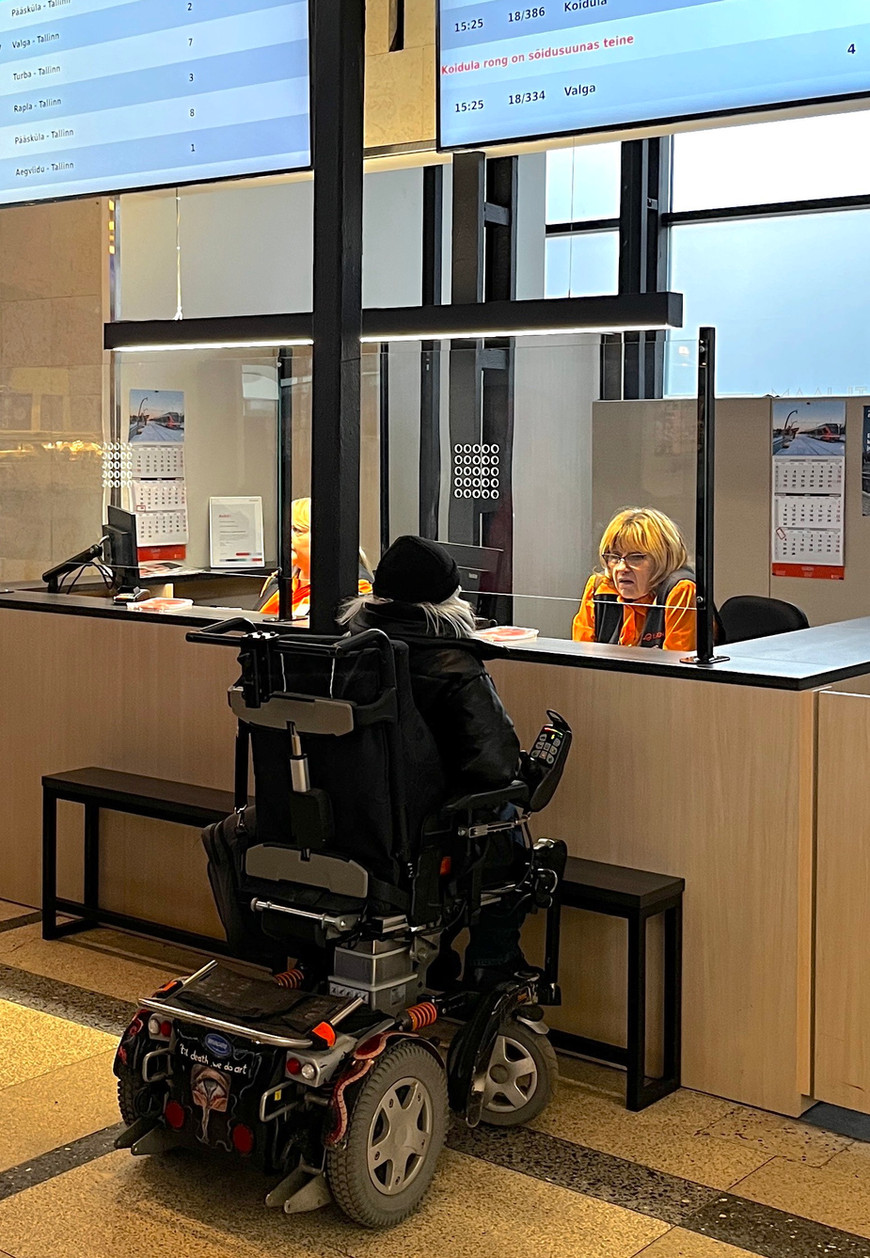
This exposed a useful complication. Elron controls the trains and what happens inside them. Tracks and platforms belong to railway infrastructure companies. Station buildings have other owners. Display information comes through transport authorities. Local governments organise connecting transport and influence fares.
Passengers do not care who owns which inconvenience. So the project brought Elron, Eesti Raudtee, Edelaraudtee, GoGroup, the Transport Administration, local governments and other partners into the same process. Everyone could finally see their part in one passenger experience.
04
Seventy-five problems. A useful order.
The research identified 75 distinct pain points. A validation survey with nearly 4,600 responses turned them into a clear priority list: 39 urgent issues, including ten especially critical ones, followed by 17 medium and 19 lower-impact concerns.
For the first time, Elron and its partners had a systematic, validated view of what needed attention, in what order and by whom. Workshops with everyone from senior management to train drivers then generated, prototyped and tested possible solutions.
Changes began while the larger programme was still under way: clearer disruption communication, better staff guidance, improved planning around maintenance, stronger replacement-bus standards, more bicycle capacity, simpler boarding with prams and bicycles, better onboard connectivity and improved signage. Work also began on more weatherproof platforms, real-time information, mobile services and reserved seating.
The point was not to wait for one enormous solution. It was to know which improvements could help now, which required coordination and which needed longer-term investment.
The useful conclusion
It isn’t the train that makes train travel good. It is everything else.
The project received first place in the service-design category for business projects at the 2024 Estonian Design Awards.